New toilet partitions are one of those purchases where the material decision matters as much as the price. A powder-coated steel stall and a solid-plastic stall can look similar in a catalog, but they hold up very differently in a high-traffic school restroom over ten years. School Fix® supplies complete bathroom stall systems in all five partition materials, each one sized to your specific restroom layout and shipped with the concealed hinges, latches, and bumpers needed for a finished installation.
Choose the material to match your environment and budget:
- Powder-Coated Steel: the most popular and most economical option. A baked-enamel finish over a honeycomb core, available in the widest range of colors. Best for standard, dry, well-ventilated restrooms.
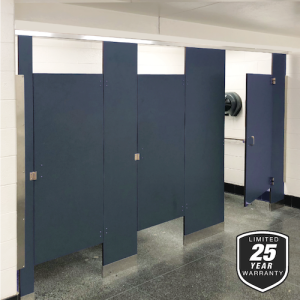
- Solid Plastic (HDPE): the workhorse for schools. Moisture-proof, graffiti-resistant, and impervious to rust or delamination; the same color throughout so scratches don’t show. Ideal for high-traffic and humid restrooms.
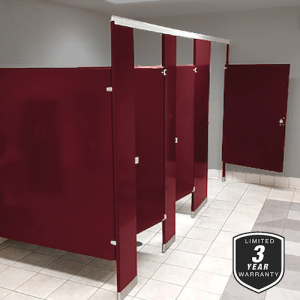
- Phenolic: the most durable choice for heavy abuse and wet environments such as locker rooms and gang showers. Black-core construction with a 10-year warranty.
- Plastic Laminate: Wilsonart laminate over a particleboard core; the budget option for dry, indoor restrooms where moisture isn’t a concern.
- Stainless Steel: the premium, architectural choice. ASI Global Partitions’ stainless systems offer Integrated Privacy™ and an optional textured finish for maximum vandal and corrosion resistance.
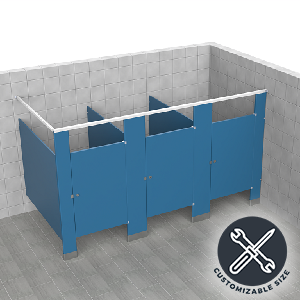
Partitions are quoted and built to your room. The fastest path to an accurate price is to sketch your restroom: mark where the walls are and the measurements of each stall area, note the material you prefer, and indicate the style (floor-anchored, overhead-braced, ceiling-hung). Submit it with the toilet partition quote form and our team reviews the layout before quoting to confirm every door, panel, pilaster, and bracket is accounted for. For non-standard rooms, custom toilet partitions are available. And if your existing stalls are mostly sound, repairing them is almost always cheaper than replacing.